
Jemaa el-Fna history in short
Marrakech was founded by the Almoravids between 1070 and 1072. That date belongs to the city, not to the square as you see it today. Dates given for the square itself range from the 11th to the 14th century, so treat any single year with care.
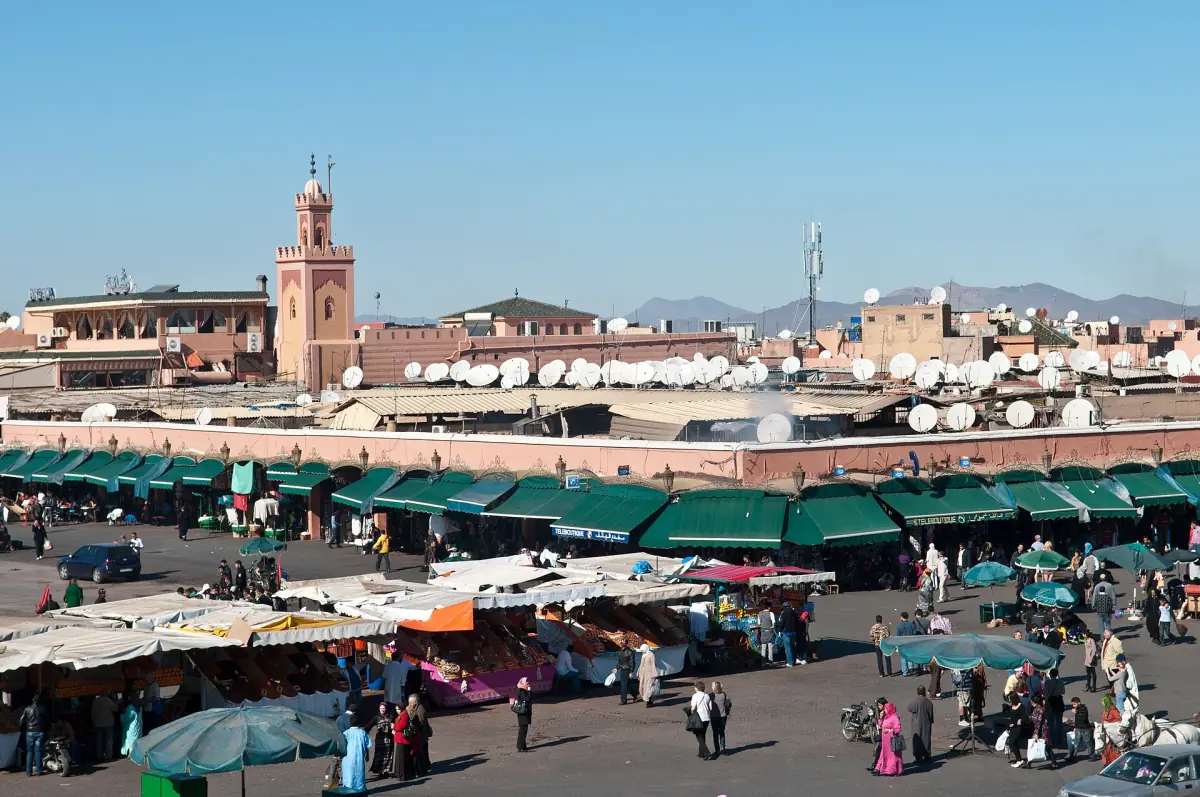
What is certain is the setting: an open, triangular space at the entrance to the medina, used for markets, food and public performance for centuries. If you would rather see it with a guide than read about it, there are medina walking routes and our own page on guided Jemaa el-Fna tours.
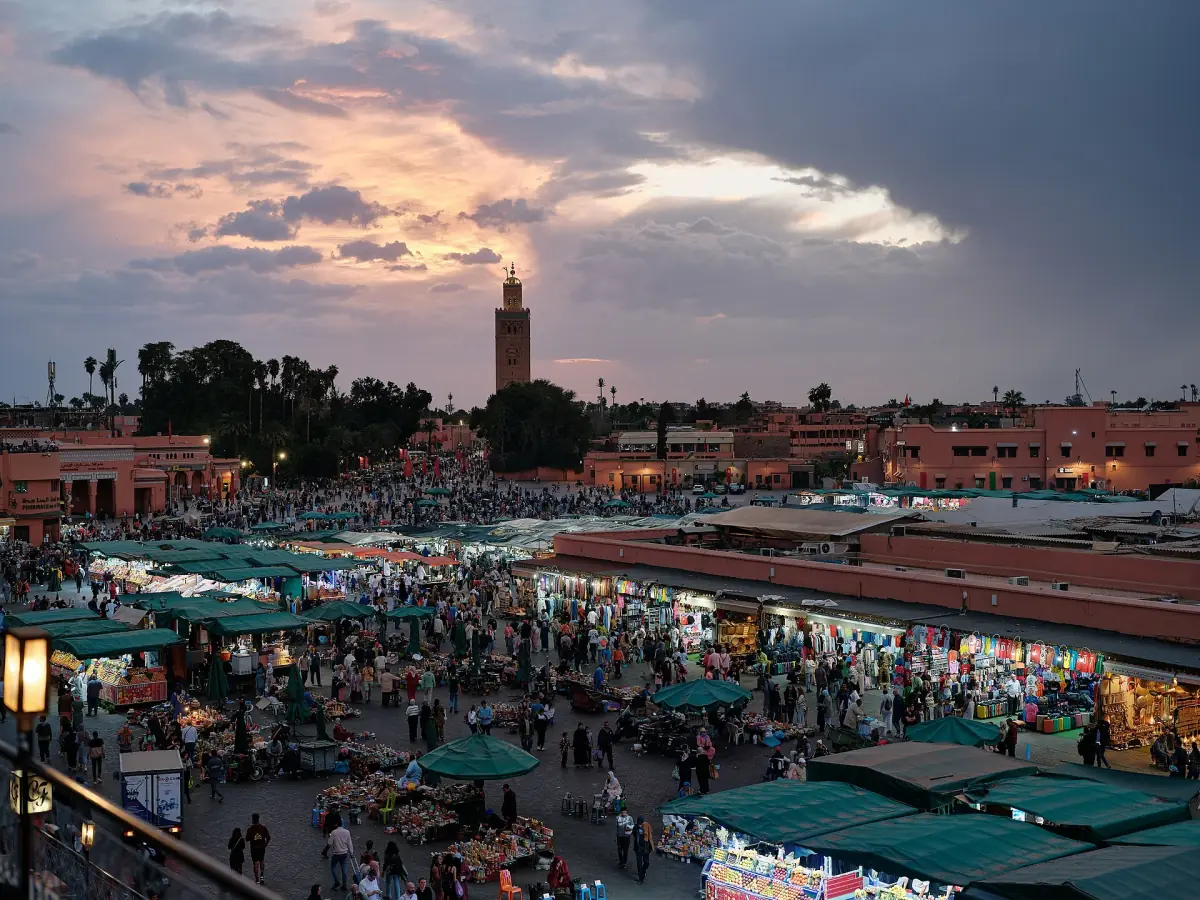
What does the name Jemaa el-Fna mean?
Two readings circulate, and neither is settled.
An assembly of the dead
One reading takes the name as a place where the dead gather. This version is widely repeated, but it has no firm proof.
A mosque never finished
The other reading ties the name to a mosque that was left unfinished or ended in ruin. It points to the same open ground, but again there is no single confirmed translation.
Spelling
You will see Jemaa el-Fna, Jamaa el Fna, Djemaa el Fna and other forms. They all mean the same square. UNESCO writes Jemaa el-Fna for the cultural space and Jamaa El Fna for the World Heritage listing of the medina.
Our pick: the historic medina
Our take: a licensed guide links the square to the Koutoubia, the tombs and the old quarter.
Hand-picked tours, booked through GetYourGuide. Prices are indicative starting prices in euros (as of October 2026). Tap a tour for live availability and the current price in your currency.
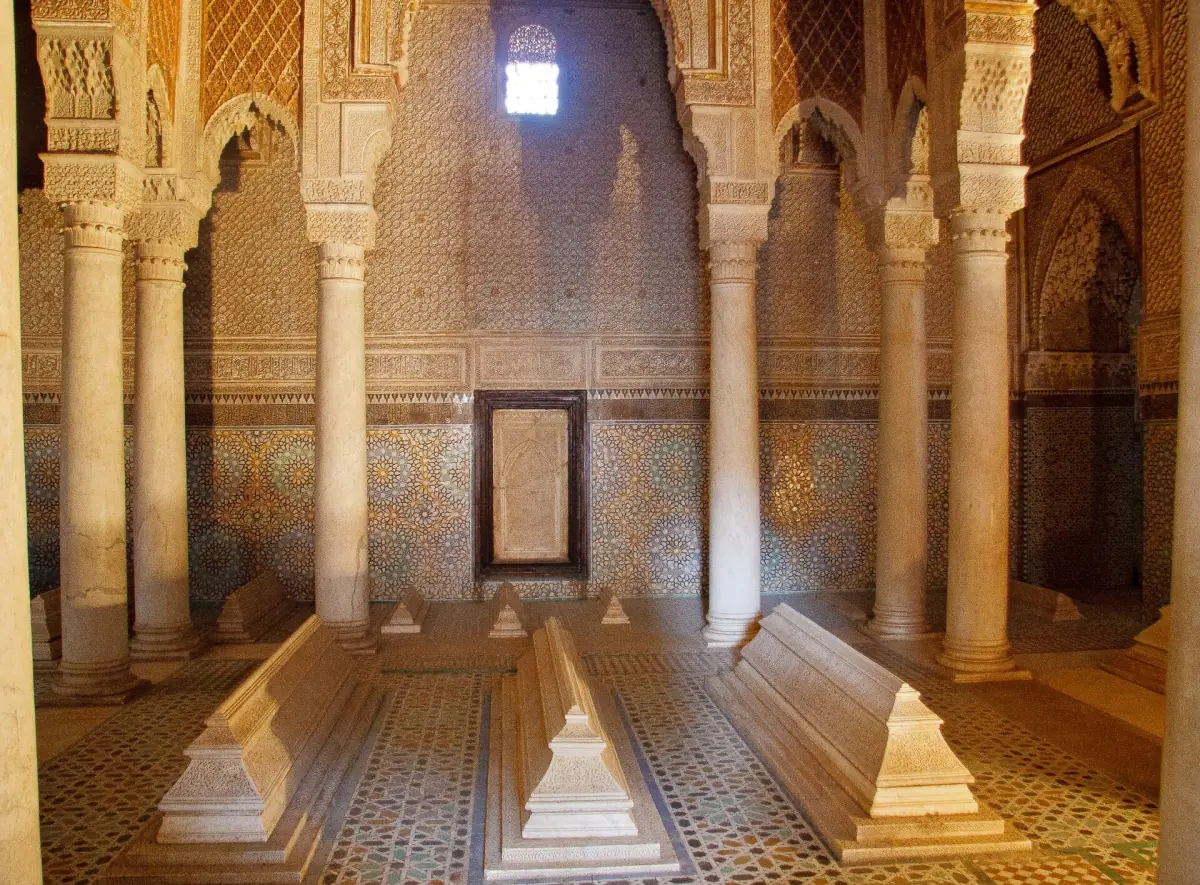
Medina tours and food walks at Jemaa el-Fna
A guide can put the square, the souks and the palaces into context. Compare walks, food tours and day trips, with live availability.
The city around the square
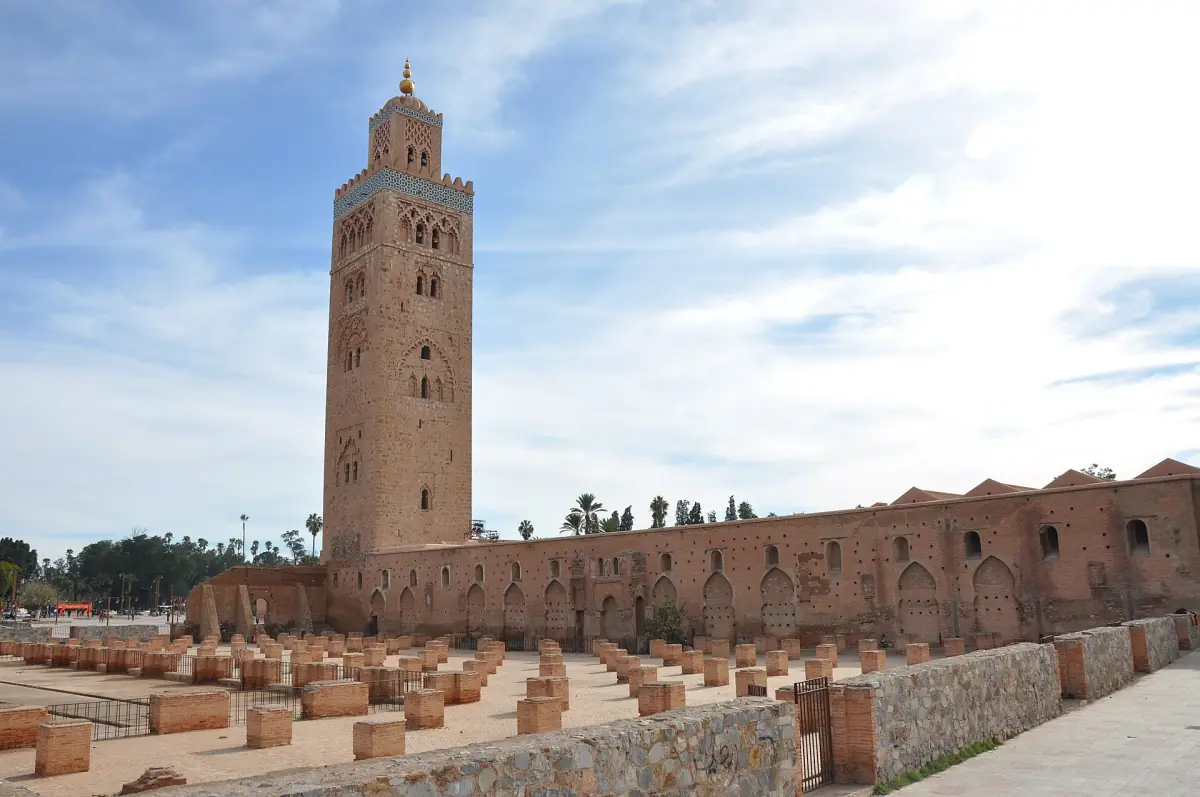
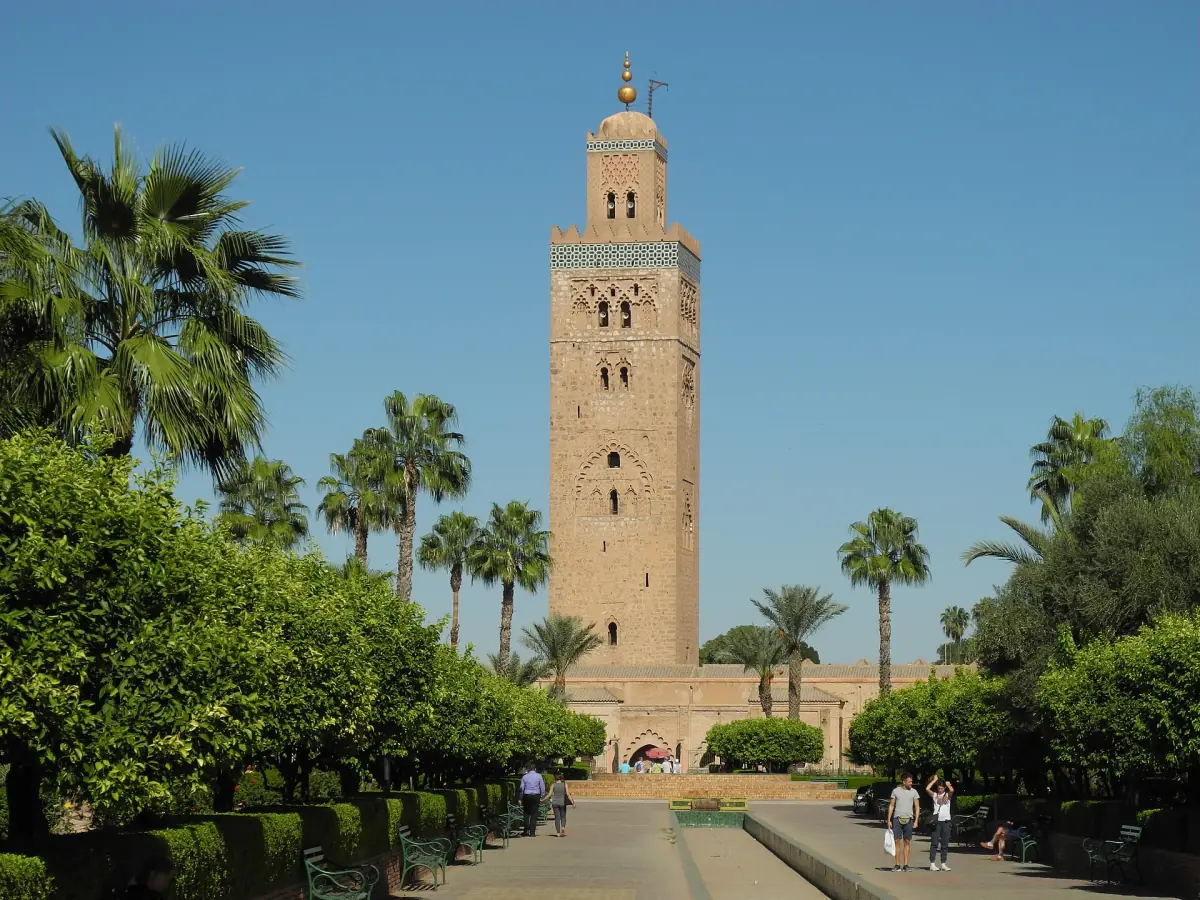
The Almoravids founded the city in the 11th century. The Koutoubia Mosque, west of the square, dates from the Almohad period in the 12th century, and its minaret is still the landmark you navigate by. Read more in our guide to the Koutoubia Mosque and its gardens.
The south of the medina holds the palaces and the Mellah quarter. The covered markets run north from the square towards the Ben Youssef Medersa. The square sits between these two worlds, which is one reason it became a meeting point.
Details on the palaces and museums are on the page about things to do near Jemaa el-Fna.
UNESCO status: two different listings
The square and the medina are listed separately. Do not mix the years.
| Listing | Year | What it covers |
|---|---|---|
| Medina of Marrakesh | 1985 | The historic city as World Heritage, including its monuments and walls |
| Cultural space of Jemaa el-Fna | 2001 | Proclaimed as a masterpiece of oral and intangible heritage |
| Cultural space of Jemaa el-Fna | 2008 | Entered on the Representative List of intangible cultural heritage |
The listing for the square protects a living practice, not a building. It does not set up a show schedule, and it does not guarantee that a given performer is there on your evening. For most visitors the year to remember is 2008 for the square and 1985 for the medina.
Storytelling, music and the halqa
The heritage listing names storytellers, poets, Amazigh musicians, Gnaoua dancers and players of the hajouj and senthir. Audiences gather in circles, called halqa, around a performer. The tradition is oral, which is why it is protected as intangible heritage.
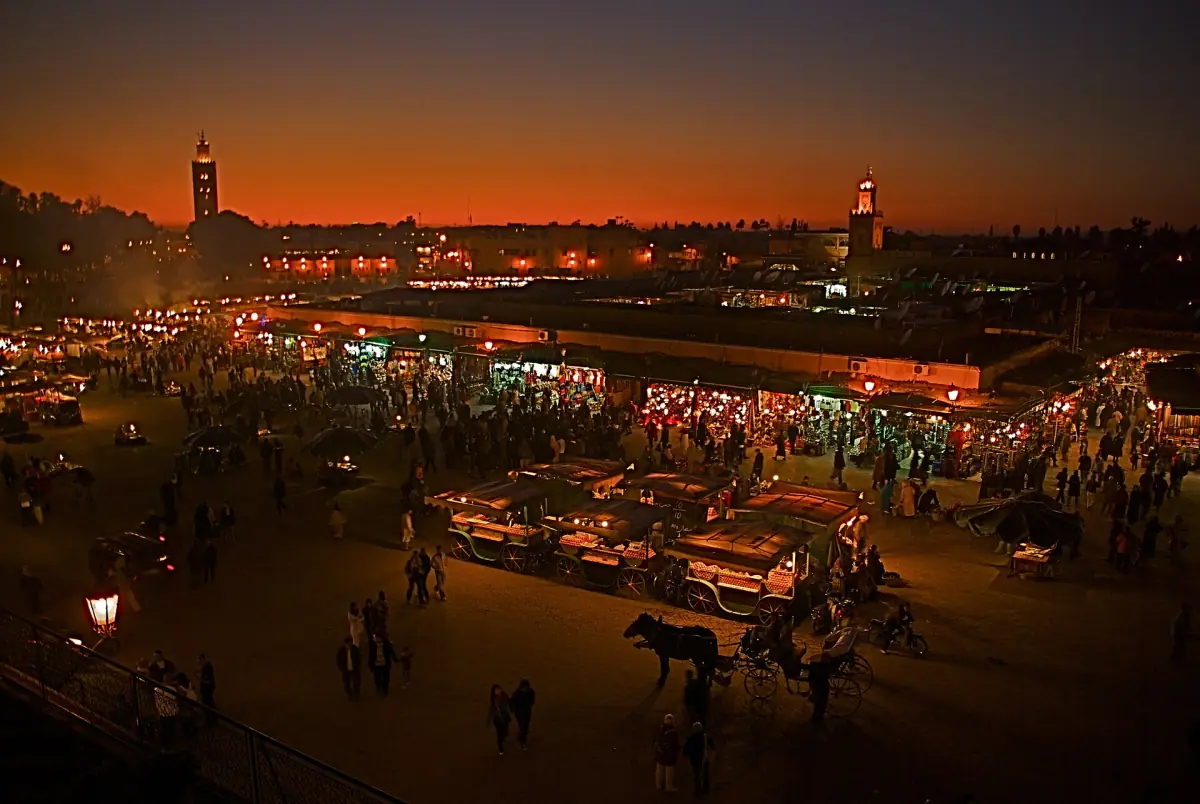
There are no fixed show times. Performers appear in the late afternoon and evening, and the mix changes from night to night. Our guide to the square at night describes the usual rhythm. Snakes and chained monkeys are also kept on the square for tourist photos. Animal-welfare groups document harm to these animals, so do not pay for photos with them.
Recent history: remembrance and repair
Two events shaped the last fifteen years.
28 April 2011
A bomb attack hit the Café Argana on the square and killed 17 people. We remember the victims. For present conditions, use current travel advice and not this event.
8 September 2023
The earthquake damaged walls, palaces and mosques in the medina. Securing and restoration work has continued since, so parts of some buildings can be closed. Check the opening status of a site before you walk there.
2026 and the stalls
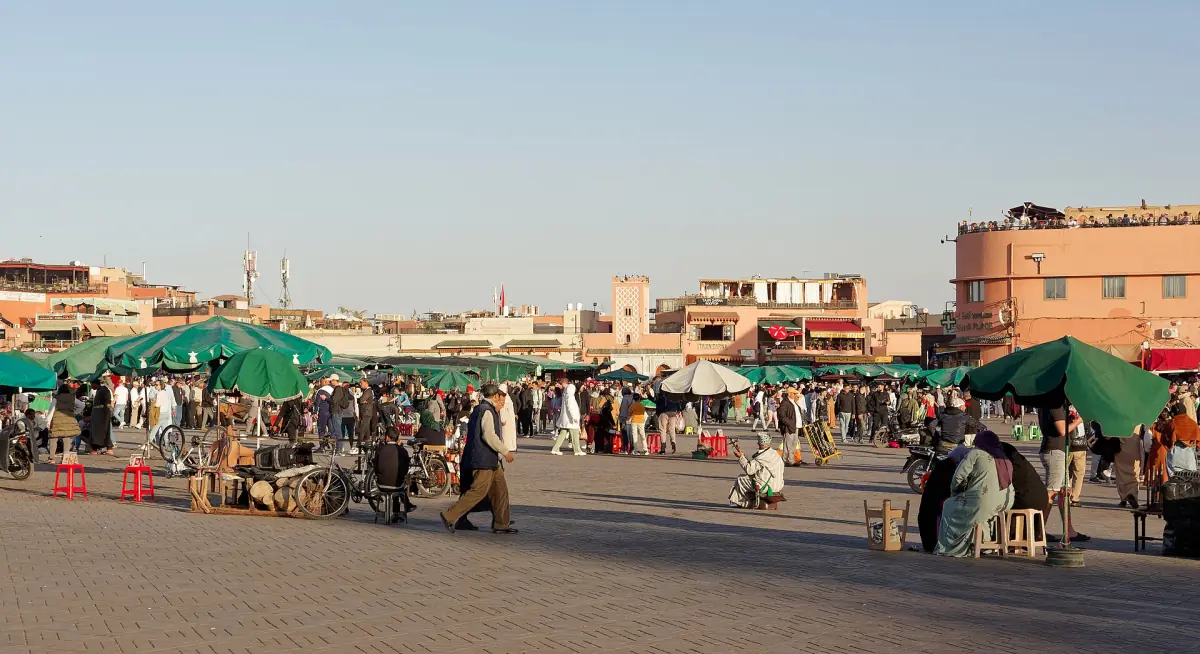
The food stalls are being renewed, with new stall fittings put out to tender in 2026, and work continues on access roads. The layout can therefore differ from older maps and photos. The square itself remains the same open public space.
Jemaa el-Fna history: frequently asked questions
What does Jemaa el-Fna mean?
There is no single agreed translation. One reading points to an assembly of the dead, another to a mosque that was left unfinished. Both are explanations, not proven facts.
When was Jemaa el-Fna listed by UNESCO?
The cultural space was proclaimed in 2001 and entered on the Representative List of intangible heritage in 2008. The medina of Marrakech was inscribed as World Heritage in 1985. These are separate listings.
How old is Jemaa el-Fna?
Marrakech was founded between 1070 and 1072. Dates for the square itself range from the 11th to the 14th century, so no exact year is safe to quote.
Is the square still a place for storytellers?
Yes, performers still work there, mostly from late afternoon into the evening. There is no fixed programme, so what you see depends on the night.
Is this the official Jemaa el-Fna website?
No. This is an independent guide. It is not run by the city of Marrakech, the national tourist office or UNESCO, and it is not connected to any tour operator, riad or hotel.